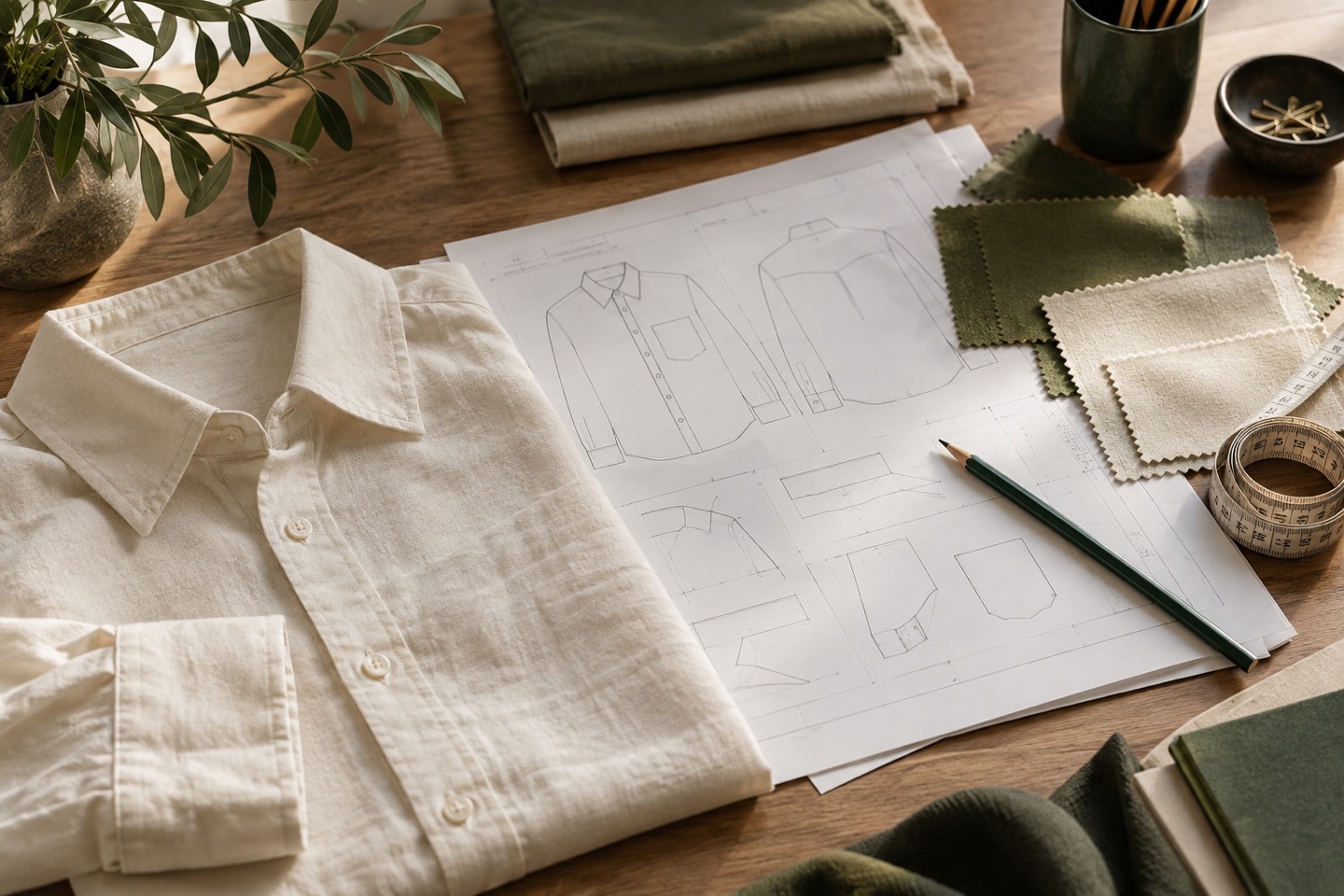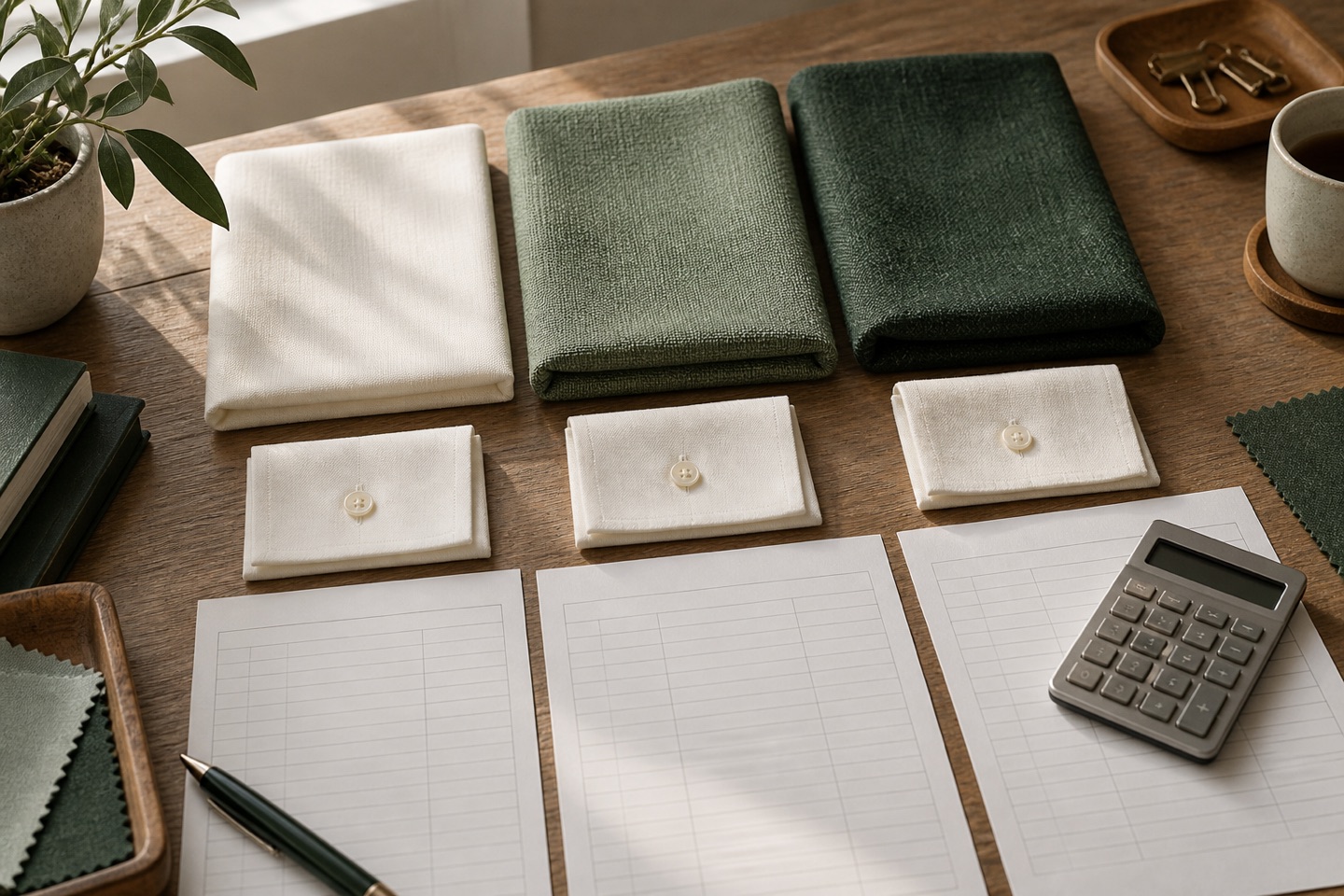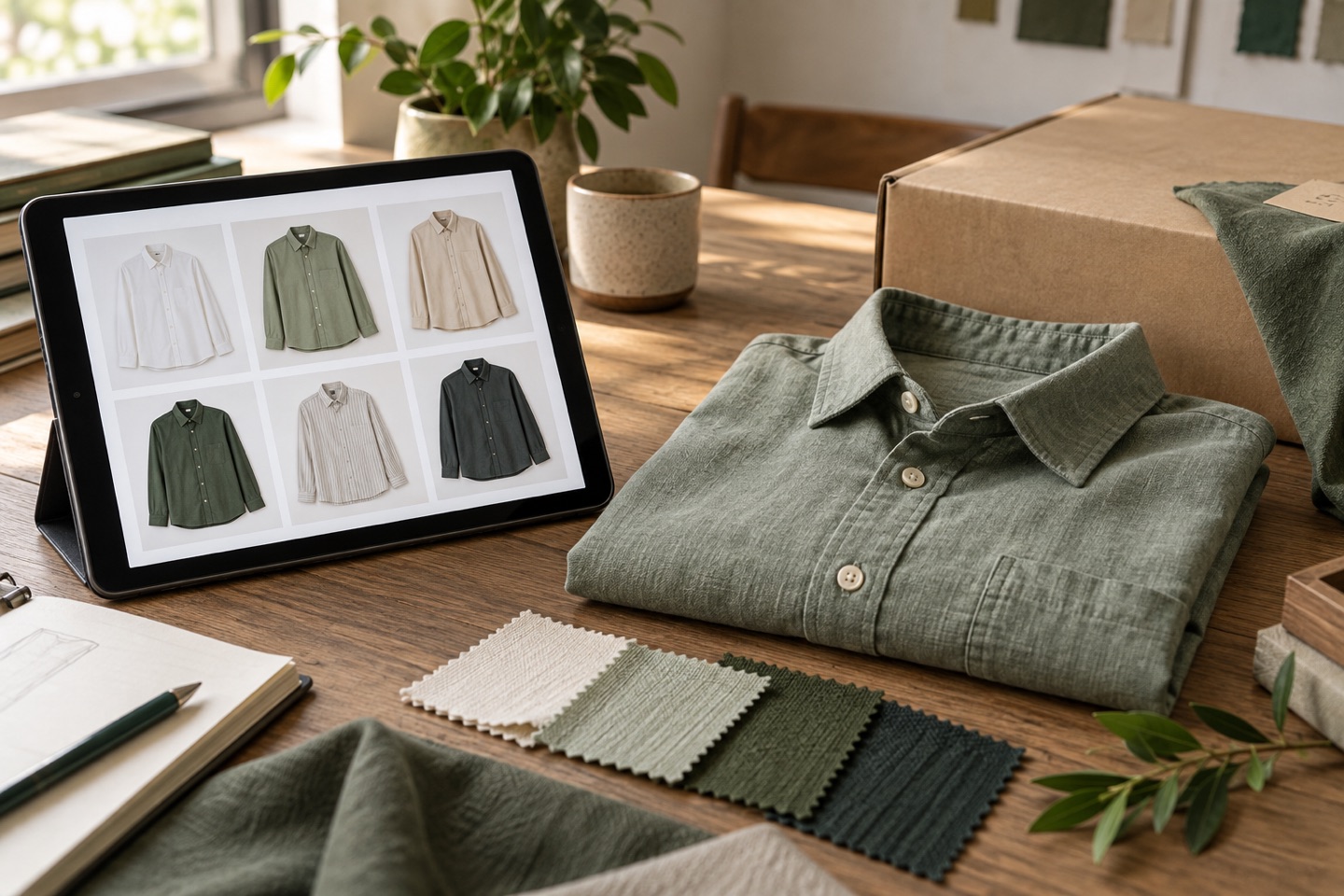
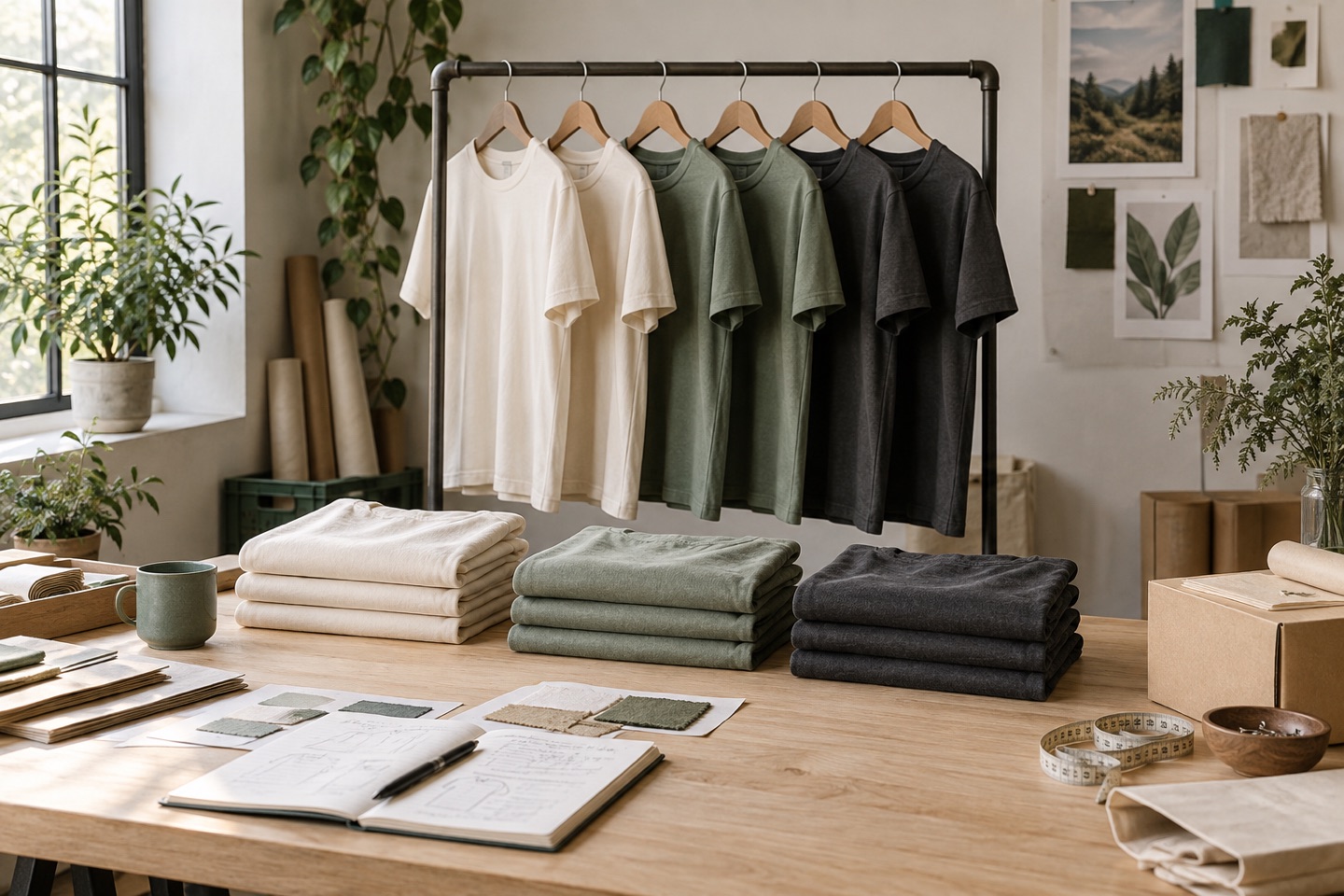
A request for “300 pieces” leaves a factory with several unanswered questions. How many garments, fabrics and colours does that include? A small collection becomes easier to discuss when you divide it into the combinations that need to be produced.
Break the collection into production quantities
Consider an illustrative order of 240 garments across four styles and three colours. An even split gives 20 units for each style-colour combination. If each combination has four sizes, an even size split is five units per size. These figures are planning arithmetic, not a claim that a supplier will accept the order.
Put the split in a table before asking for prices. If you have a demand-based size ratio, use it instead of dividing evenly. Ask the supplier which part of the split affects feasibility: the style, colour, fabric, trim or total order.
Ask which minimum applies
- Is the garment minimum per style, per colour or across the order?
- Does the chosen fabric have a separate minimum?
- Does a custom colour require a different quantity from an available colour?
- Do labels, zips or decoration have separate setup or minimum requirements?
- Can styles share materials without changing the agreed product?
Keep the answers attached to the relevant specification. A supplier's minimum for an available fabric is not necessarily its minimum for a custom material. If the specification changes, reconfirm both the quantity and the price.
Compare a reduced range with the original brief
You could ask about two styles in two colours instead of four styles in three colours. With the same illustrative total of 240 units, each style-colour combination becomes 60 units. That may be a different conversation, but only the supplier can confirm feasibility.
Another option to discuss is retaining the design while using a fabric or colour already available from the supplier. Request a sample or swatch to assess that alternative. Do not accept a material change merely to reach a smaller minimum if its fit, feel or intended use no longer suits the collection.
Budget for the work before the production run
Request the cost of samples, pattern work, revisions and any setup separately from production. Clarify whether a sample credit is offered, what conditions apply and where that agreement will be recorded. A credit should not be treated as available until the supplier confirms it.
For a first test, compare the total cash needed for each feasible option and the inventory it leaves you with. Keep unquoted charges visible. The quote comparison worksheet can help organise the replies without assuming unknown costs are zero.
Send a feasibility enquiry with room for answers
State your preferred specification, acceptable alternatives and non-negotiable requirements. Ask for the smallest workable order for each option, its sample terms and the reason for any minimum. If no option fits, revise the range before paying for development. Use the apparel RFQ checklist to assemble the enquiry.