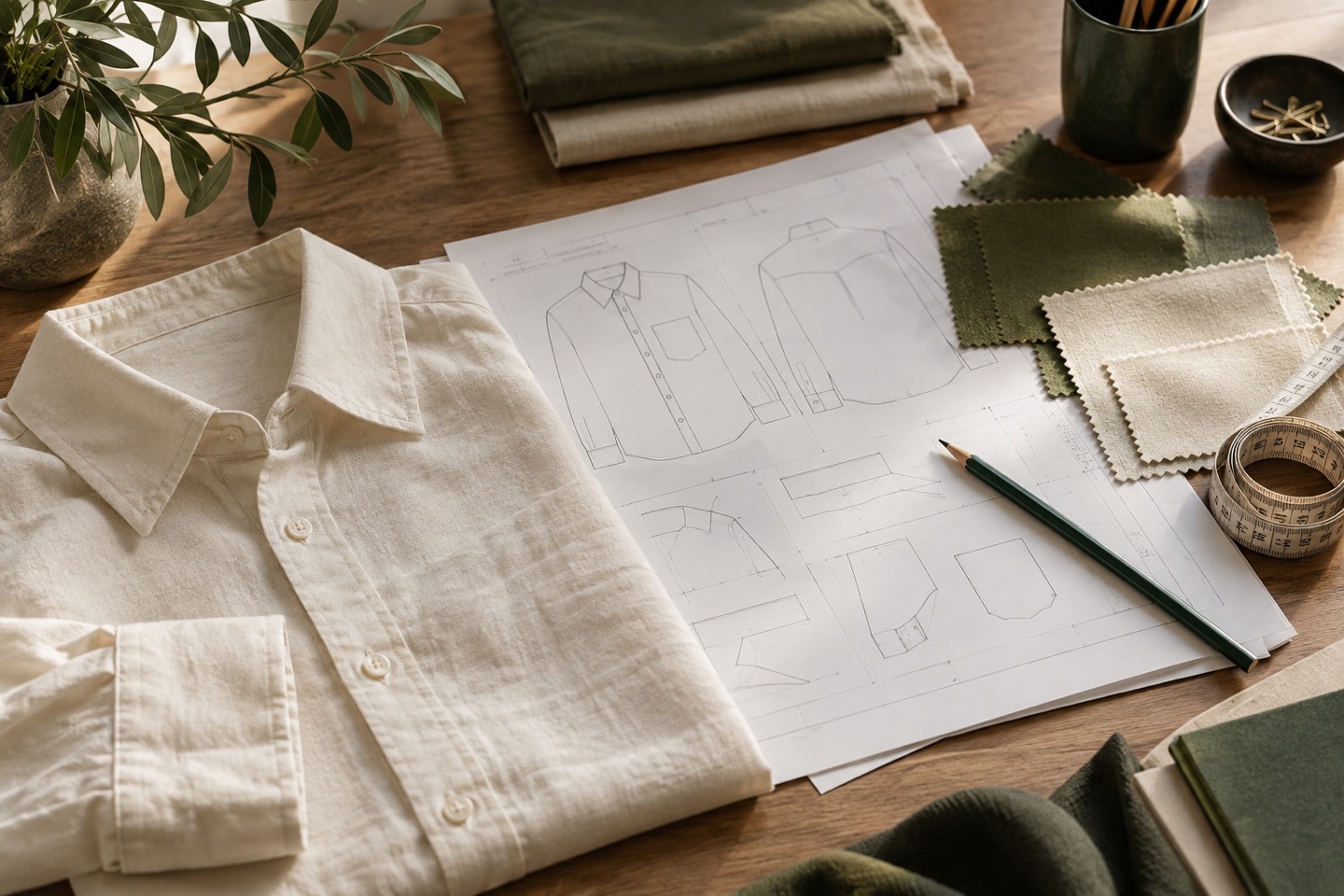
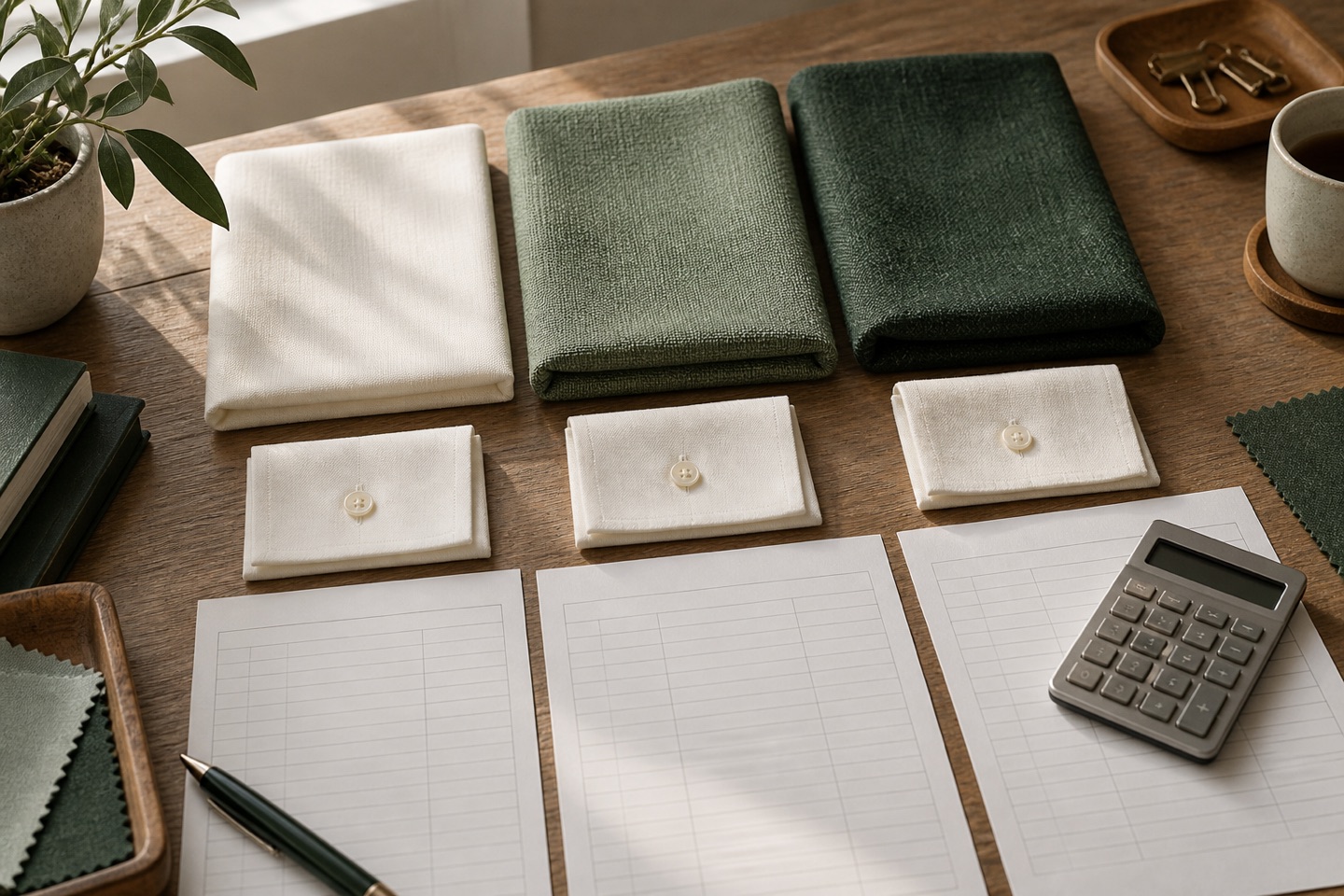
Two quotes only become comparable when they describe the same garment and order. Before choosing the lowest number, check the specification, quantity split and work included. Use the steps below to turn supplier replies into a decision record you can revisit when sampling starts.
Freeze one version of the brief
Give your enquiry a version or date and use it for every supplier. Include fabric composition and weight if known, measurements, construction references, decoration, labels and packaging. If a detail is undecided, mark it as an open question. Ask suppliers to label substitutions separately so an alternative fabric does not quietly become the basis of the quote.
Keep the order split visible. A price for one style in one colour should not be compared directly with a price for several styles and colours, even if the overall unit count is the same.
Use a quote comparison worksheet
| Field | What to confirm |
|---|---|
| Specification | Brief version, fabric, measurements and any substitutions |
| Quantity | Units per style and colour; size split; minimums |
| Unit price | Currency and exactly what the quoted amount includes |
| Development | Patterns, samples, revisions and decoration setup |
| Packaging | Labels, individual packing and cartons |
| Delivery | Named handover point and separate transport charges |
| Schedule | What approvals or materials start the production clock |
| Open questions | Missing answers and who needs to resolve them |
Check what the unit price leaves out
For illustration only, Supplier A quotes 300 garments at $8 plus $180 for sampling and $60 for labels. That gives $2,640 for those stated items. Supplier B quotes $8.60 per garment including labels, plus a $90 sample, giving $2,670. The initial $0.60 unit-price gap becomes a $30 difference for these items. Neither figure is a landed-cost estimate, and these are invented arithmetic examples, not supplier offers.
Write “not quoted” beside unknown charges rather than assigning them zero. Freight and destination charges need separate estimates based on the agreed shipping arrangement. Resolve those with the relevant provider before using a total for a purchase decision.
Compare what happens after you approve the sample
Ask how the approved sample and specification will be recorded. Confirm the production milestones, who supplies updates and what happens if a material becomes unavailable. A proposed delivery date is incomplete without the conditions that make it achievable, such as material approval and supplier capacity confirmation.
Record how the supplier proposes to handle deviations from the approved requirements. An unclear answer is a question to resolve before an order, even when the price is attractive.
Choose the next question, not just the cheapest supplier
If one quote looks substantially different, ask the supplier to explain the difference against your worksheet. You may discover an omitted process or a useful alternative. Once the assumptions match, decide which candidate merits a sample and which evidence gaps need supplier verification. Start with the RFQ checklist if the brief is still incomplete.